Israel steps up strikes across Middle East under embattled Netanyahu
RT · 14 小时前
The latest wave of violence includes deadly attacks on Gaza, shelling in Lebanon, incursions into Syria, and West Bank raids
Israel has intensified attacks across the Middle East despite ceasefire agreements and mounting uncertainty over the country’s political leadership.
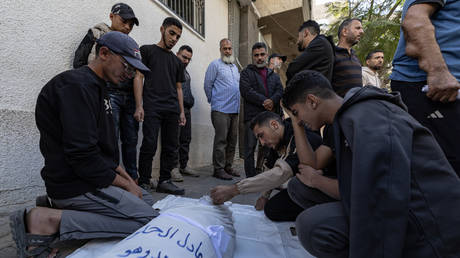
A Russian citizen was among those killed in an airstrike on a hospital in Gaza earlier this month, Russia’s diplomatic mission in Ramallah confirmed on Tuesday. The announcement came a day after an employee of the UN Palestinian refugee agency (UNRWA) was killed in a separate attack in the enclave.
The Russian national, identified as surgeon Rizk Abu Shaira, also held Palestinian citizenship and was on duty at Nasser Medical Complex in the southern city of Khan Younis when it was hit on November 12. Six people, including patients and hospital staff, were killed and more than 20 were wounded, according to local health officials.
The Israel Defense Forces (IDF) claimed that Hamas had been using the medical facility for military purposes. The group denied the allegation.
Five journalists working for media outlets including Reuters, the Associated Press, and Al Jazeera were killed in a double strike on the same hospital in August last year. The IDF acknowledged carrying out the attack, said it regretted harm to “uninvolved individuals,” denied deliberately targeting reporters, and promised an inquiry.
Israel has repeatedly faced accusations of deliberately targeting journalists and medical personnel since launching its offensive in Gaza in October 2023. The campaign followed a Hamas-led incursion into southern Israel on October 7, in which around 1,200 people were killed and 251 were taken hostage.
More than 74,000 Palestinians have died in the ensuing war, including over 1,600 since a ceasefire took effect in October last year, according to local health authorities.
An Israeli airstrike on Gaza City on Tuesday killed the head of Hamas’ internal security apparatus, Naeem Abu Nahel, both sides confirmed.
Mounting violence in the West Bank
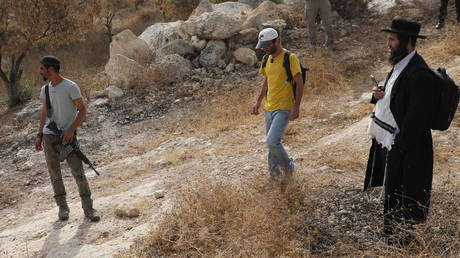
Israeli forces have also carried out operations across the occupied West Bank, where Palestinian communities face increasingly frequent attacks by settlers.
On Sunday, settlers entered several villages, set fire to vehicles, and defaced property with racist graffiti. The UN documented 467 such incidents resulting in casualties or property damage in October, the highest monthly figure since it began monitoring them in 2006.
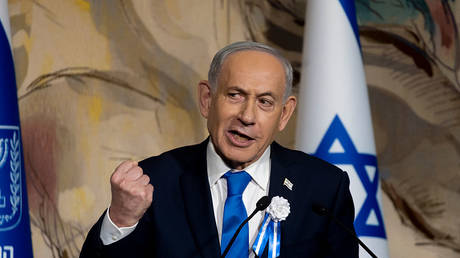
Gadi Eisenkot, the Israeli opposition leader tasked with forming a new government, condemned the violence as “Jewish terrorism” and accused far-right ministers in caretaker Prime Minister Benjamin Netanyahu’s government of inciting it.
An estimated 750,000 Israelis live in more than 500 settlements and outposts across the occupied West Bank, including East Jerusalem. The UN considers the settlements illegal under international law. The Israeli authorities have nevertheless continued to expand them.
Military pressure on Lebanon and Syria
In neighboring Lebanon, Israeli warplanes and artillery targeted several towns across the south on Tuesday, the Lebanese state-run National News Agency reported.
Beirut has accused Israel of undermining a US-mediated ceasefire agreement by continued bombardment, demolitions, and its failure to withdraw troops from Lebanese territory. UN peacekeepers documented 90 airstrikes and some 2,840 Israeli artillery rounds in October alone.
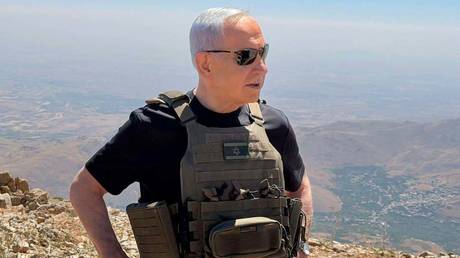
In southern Syria, Israeli troops entered several villages in the provinces of Daraa and Quneitra, set up checkpoints, searched homes, and restricted farmers’ access to their land.
The Syrian Observatory for Human Rights has recorded around 105 such incidents since the beginning of November. Damascus has repeatedly condemned the Israeli military presence as a violation of its sovereignty and the 1974 disengagement agreement.
Israel’s military actions are continuing against a backdrop of political deadlock following the October 27 election, in which Netanyahu’s bloc lost its parliamentary majority.
A third round of coalition talks between his Likud party and Eisenkot’s Yashar took place on Monday without a breakthrough. The incumbent has insisted on retaining his position under any power-sharing agreement.
Losing office could deprive Netanyahu of a key shield in his ongoing corruption trial, the Washington Post reported on Monday. He faces charges of bribery, fraud, and breach of trust in three separate cases but denies wrongdoing and has requested a presidential pardon.
Eisenkot has also pledged to establish an independent commission to investigate the security failures that preceded the Hamas-led October 7 attack. Netanyahu has faced accusations of disregarding warnings of a potential assault.
Risk of renewed war with Iran
Eisenkot said on Monday that Tehran posed no immediate threat warranting military intervention before a new government takes office. Netanyahu claimed his opponents were downplaying security concerns for political reasons.
Yair Golan, leader of Israel’s Democrats party, accused the caretaker prime minister of seeking another war with Iran and fueling tensions in the West Bank.
A unilateral attack on the Islamic Republic could trigger a wider conflict involving Lebanon, Syria, and Gaza, Israeli military intelligence officials warned, according to a report by Israel’s Channel 12.