‘We hope it doesn’t escalate to genocide’: Is there a future for Russians in the Baltics?
RT · 9 小时前
The Baltic states’ confrontation with Russia is reaching into the lives of residents whose homes, families, and futures are rooted there
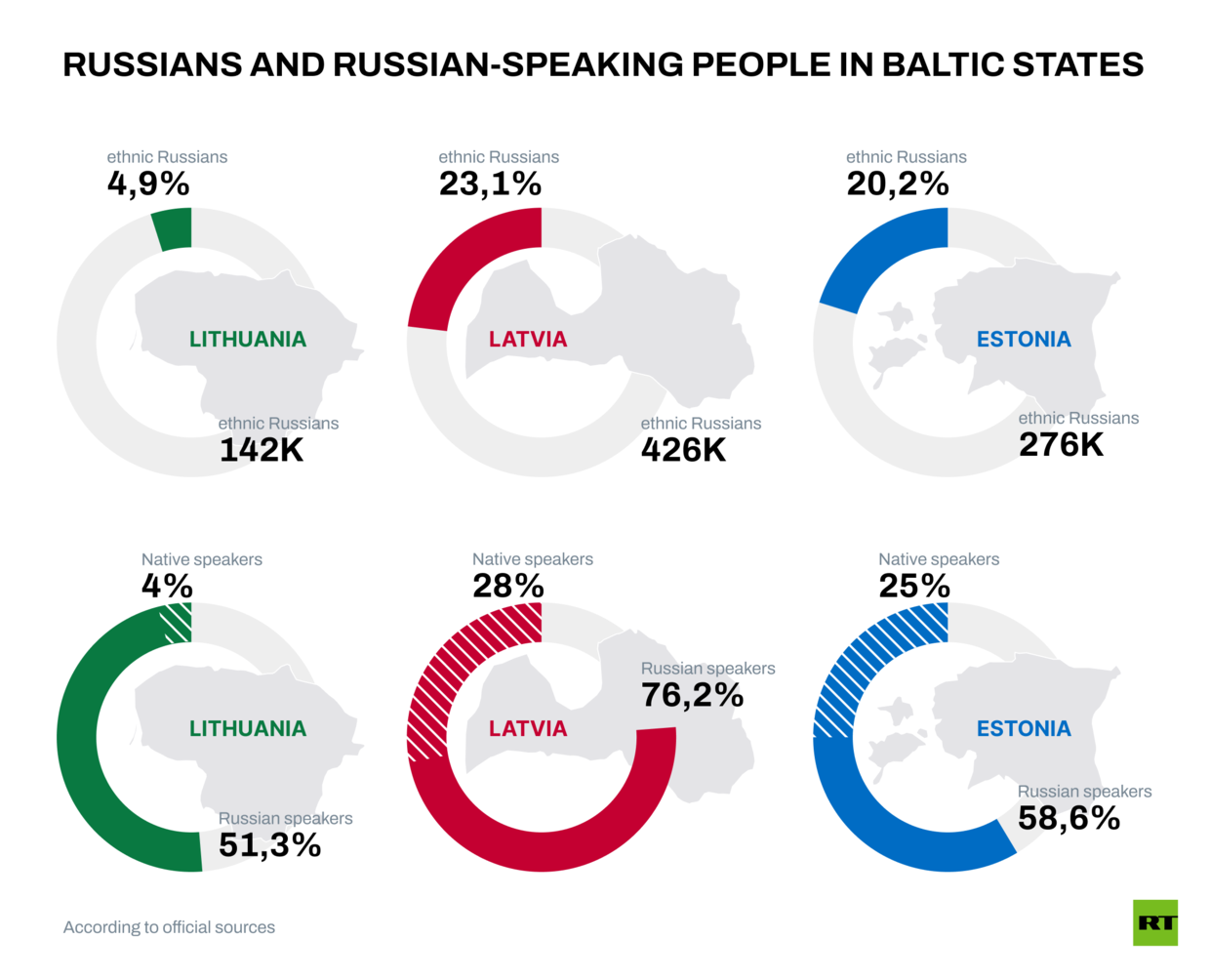
After February 24, 2022, life for Russians in Latvia, Lithuania, and Estonia became more difficult than ever. The authorities in these three countries have tightened immigration rules under the guise of ‘protecting national security’. They’ve limited the use of the Russian language, banned events for the Russian-speaking community, and dismantled Soviet-era monuments. Those deemed to be ‘pro-Russian activists’ have had their residence permits revoked, have been expelled from the country, and in some cases, faced criminal charges.
Officially, these measures are framed as necessary steps to combat ‘hybrid threats’ and the Kremlin’s influence. However, in practice, they increasingly target ordinary people: teachers and doctors, retirees, and parents of school children – those who have lived in these countries for decades, paid taxes, built homes, and considered the Baltics their homeland. The Russian language is gradually being pushed out of schools and public spaces, Soviet history is labeled as alien, and a person’s loyalty is now assessed based on survey responses and their stance on the Ukraine conflict.
Who’s been hit hardest?
Russians in the Baltics may be categorized into three groups. The first consists of Russian citizens who remained in Latvia, Lithuania, or Estonia after the collapse of the Soviet Union. The second group includes Russian-speaking residents who acquired citizenship in one of the Baltic states.
The third group is the so-called ‘non-citizens’ of Latvia and Estonia – people who moved to the republic during the Soviet period but did not receive citizenship after 1991. Non-citizens cannot vote, cannot hold a number of public offices, and face restrictions when working in law enforcement, legal services, and other areas.
When these categories mix, painful stories often arise. After the beginning of the Russia-Ukraine conflict, people who were born in one of the Baltic countries, were citizens of these countries, but spoke Russian, suddenly felt like they were no longer welcome in society.
“Since 2022, the position of Russians in the Baltics has taken a turn for the worse. A ban was introduced on the use of the Russian language at enterprises, in schools, and in public places. Russians were oppressed based on their nationality and citizenship. Moreover, so-called ‘non-citizens’ face even greater oppression,” the head of the volunteer movement Put Domoi (The Way Home), Anatoly Bublik, told RT.
“Citizens with Russian roots and non-citizens are deprived of many rights: the right to vote, the right to communicate in their native language, and the right to self-determination. These basic rights exist in all the countries of democratic Europe, but in the Baltic countries they are suppressed. It is terrible that neither the UN nor the European Union reacts to the numerous complaints. Many ordinary Europeans don’t realize that such a problem exists. Why are these nations allowed to oppress their inhabitants – and not only Russians, but also ethnic Latvians, Lithuanians, and Estonians? Moreover, they are proud of it! They shout about their ‘victory’ over Russians all over the place,” he added.
Russian-speaking citizens of Latvia, Lithuania, and Estonia do not formally fall under most of the migration measures. But they are keenly aware of the changing atmosphere, the language policy, and the growing wariness of people around them. “After 2022, pressure on the Russian-speaking inhabitants of the Baltic States has visibly increased. We see restrictions on the use of the Russian language, attempts to push it out of public life. Sometimes, people are forced to make a choice: either renounce their identity or face the consequences. At the same time, it is important to understand that we are not only talking about Russian citizens but also about people who have lived for generations in Latvia, Estonia, and Lithuania. It is impossible to deprive a person of his rights only because of the language he speaks and the culture he considers native,” former State Duma deputy and head of the Svoikh Ne Brosaem (We don’t abandon our own) foundation Maria Butina told RT.
Estonia: Mass deportations
“I was the first to be deported from Estonia. The law enforcement services wanted to bring the person into a state of shock. I was at the police station and testified as a witness. Suddenly, four members of the security forces rushed in, they acted aggressively, although I was very calm and did not provoke them,” Aleksey Esakov, a deported native of Estonia, told RT.
Esakov is a board member of the non-profit organization Russian Compatriots of Europe, and one of the organizers of the Immortal Regiment-Tallinn procession, which commemorates those who fought in WWII. He was engaged in collecting humanitarian aid for the residents of Donbass and was a member of the Dobrosvet association. Esakov held Russian citizenship and a permanent residence permit in Estonia. In 2022, the Estonian Internal Security Service (KaPo) accused him of inciting national hatred, spreading Kremlin propaganda, and collaborating with Russian media. They canceled his residence permit and deported him.
“They didn’t allow me to take my things with me. I ended up in Russia with a passport and glasses – without a phone, money, or any belongings. Russian border guards gave me some delicious soup to eat and allowed me to spend the night with them since there were no buses to St. Petersburg at such a late hour,” Esakov said.
“I was very lucky to have been deported. Many other Russian-speaking people – and not only activists – fared much worse; they are currently shut away in prisons in the Baltic countries. There are many such people. They spend years behind bars, though they haven’t done anything.”
A similar story happened with Sergey Neprimerov. In September 2022, he went from Narva to Ivangorod for the funeral of a friend but was unable to return: KaPo considered him a threat to national security, canceled his residence permit, and banned entry to the Schengen zone for five years. The authorities justified their actions by saying he ‘liked’ posts in support of the Russian president on social media and took part in events dedicated to the memory of World War II.
The Estonian authorities have repeatedly stated that these are not mass deportations. There are no general statistics for the past five years on the number of deported people, but some figures are known:
From February 24 to May 23, 2022, 73 people were ordered to leave voluntarily, 12 were forcibly deported; 605 Russians were banned from entering the country
During the summer of 2022 – from June 1 to August 31 – Estonia expelled 99 Russian citizens and refused entry to 582 Russians
In 2025, 366 foreigners were ordered to leave the country, including 108 citizens of Russia
Apparently, the Estonian authorities are not about to stop. On November 2, political expert Leonid Karabeshkin was sent out of the country. He was called a threat to national security and deported.
However, for many deportees, Estonia is not just a place on the map, but their home – a place where family, work, and a lifetime of memories remain. Despite being cut off from their habitual life, they still hope to someday return home. “Estonia is my land. My father did more for Estonia than some Estonians. My father built Muuga Harbor, a ferry crossing, and a passenger port. As a construction worker, I helped build piers. We have invested a lot in this country, in this territory. This is my homeland. And I believe that the situation will change – not in the near future, but it will definitely change, and I will return home,” Esakov said.
Lithuania: Questionnaire and ‘security threat’
The Lithuanian authorities have introduced a special questionnaire for adult citizens of Russia and Belarus who wish to receive a residence permit. They are questioned about their previous work, connections with law enforcement agencies, their attitude toward the Ukraine conflict, and the status of Crimea. The authorities have the right to not consider the applications of those who refuse to fill out the questionnaire.
According to the latest official data, from September 19, 2022 to September 18, 2023, more than 1,300 people who wanted to travel to Lithuania were refused entry. In 2023, 135 Russians lost previously-issued residence permits after filling out the questionnaires. The reason was their stance on Ukraine and the status of the Crimea.
“Restrictions on crossing the border with Russia have also been introduced. And those who come to the embassies of the Russian Federation on the territory of Latvia, Lithuania, and Estonia are immediately noticed by the special services. There were cases when representatives of the special services even visited the homes of these people to conduct interrogations. They asked why the person went to the Russian embassy or consulate,” Bublik said.
Vilnius justifies its actions by citing the need to screen individuals who are “linked to Russian security services or support the aggression.” However, demanding a private citizen to publicly declare their stance on the Russia-Ukraine conflict already raises concerns regarding the right to privacy. This is felt most acutely by those who have lived in Lithuania for years and have no connection to Russian politics.
In May 2024, Lithuania deported journalist Vladimir Vodo, a Russian citizen. The State Security Department of Lithuania determined that Vodo posed a threat to national security, alleging that his views are “disloyal to Lithuania” and that he “spread propaganda on social media that aligned with Russia’s information policy.”
The journalist attempted to appeal the decision, pointing out that he was caring for his sick mother, had no ties to Russia, spoke Lithuanian, and had resided in the republic since 1989. Nevertheless, the Supreme Administrative Court of Lithuania ruled against him.“As for those already behind bars, there is no way to help them. In the Baltic states, the courts are inherently biased against individuals based on their nationality. Arguments presented by lawyers are disregarded entirely. Leniency is only possible if the detainees ‘confess’ to having some sort of phantom connection to Russian security services. But how can a person confess to something they never did?” Bublik said.
Latvia: Language as a condition for life
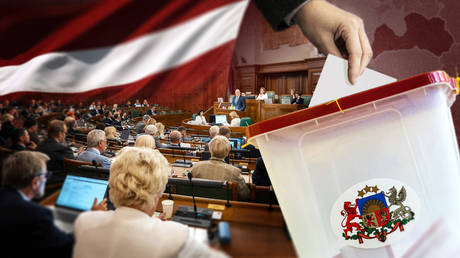
The most drastic changes took place in Latvia. In September 2022, the Saeima (Latvian Parliament) adopted amendments to the Immigration Law, under which permanent residence permits previously issued to Russian citizens ceased to be valid as of September 1, 2023. To remain in the country, Russian citizens were required to apply for EU permanent resident status, provide proof of financial self-sufficiency, and pass an A2-level Latvian language exam.
This requirement primarily affected individuals who previously held Latvian citizenship or the status of ‘non-citizen’ before obtaining a Russian passport. Estimates suggest that this concerned around 25,000 people. Exemptions were provided for those who received an education in Latvian, passed a centralized Latvian language examination, as well as for people under 15 or over 75.
For many, this was more than just a bureaucratic procedure. People who had lived in Latvia for decades – working, paying taxes, and raising their children – suddenly faced the requirement to demonstrate proficiency in the official state language and undergo additional examinations within a very tight time frame. According to the Latvian authorities, by September 2023, more than half of the Russian citizens subject to these new rules hadn’t passed the exam.
“I was particularly moved by the story of a poet named Lyudmila Mezhinsh, who was forcibly deported from Latvia. She found refuge in Pskov. She speaks Latvian fluently, so the issue was not a lack of language proficiency. She refused to complete the second part of the exam – signing a document stating that she is ‘against Russia.’ That, too, was a mandatory condition. She was deported with only two bags; she was not allowed to pack any of her belongings. She is elderly, can barely walk, and naturally, had no intention of leaving her home. Her husband, who is Latvian, came with her. He has absolutely no connection to Russia whatsoever,” Bublik said.
Later, Riga granted some Russians a two-year period to pass the exam; however, the underlying logic remained unchanged: Without knowledge of Latvian and a completed ‘loyalty questionnaire’, permanent residency was impossible. Since 2022, anywhere from several hundred to over 800 people have at various times faced the threat of expulsion or deportation – for example, 500-841 individuals in 2025. As of March 2026, the total number of people who have either left the country or been deported is estimated at 11,800.
Language, schools, and memory
Since 2022, the Baltic states have taken steps to push Russian out of public life: Residents have lost access to Russian media, Russian-language national media outlets have been shut down, and the rebroadcasting of Russian content has been blocked.
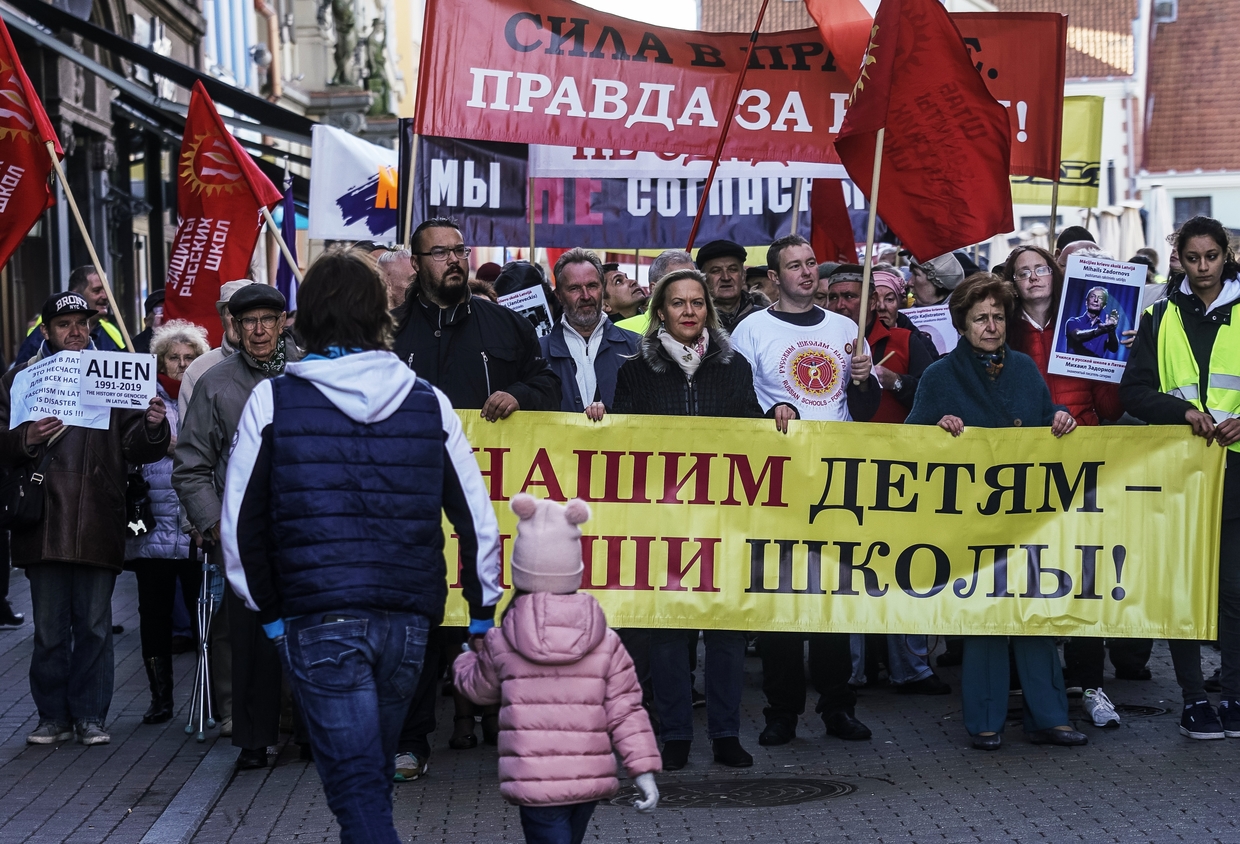
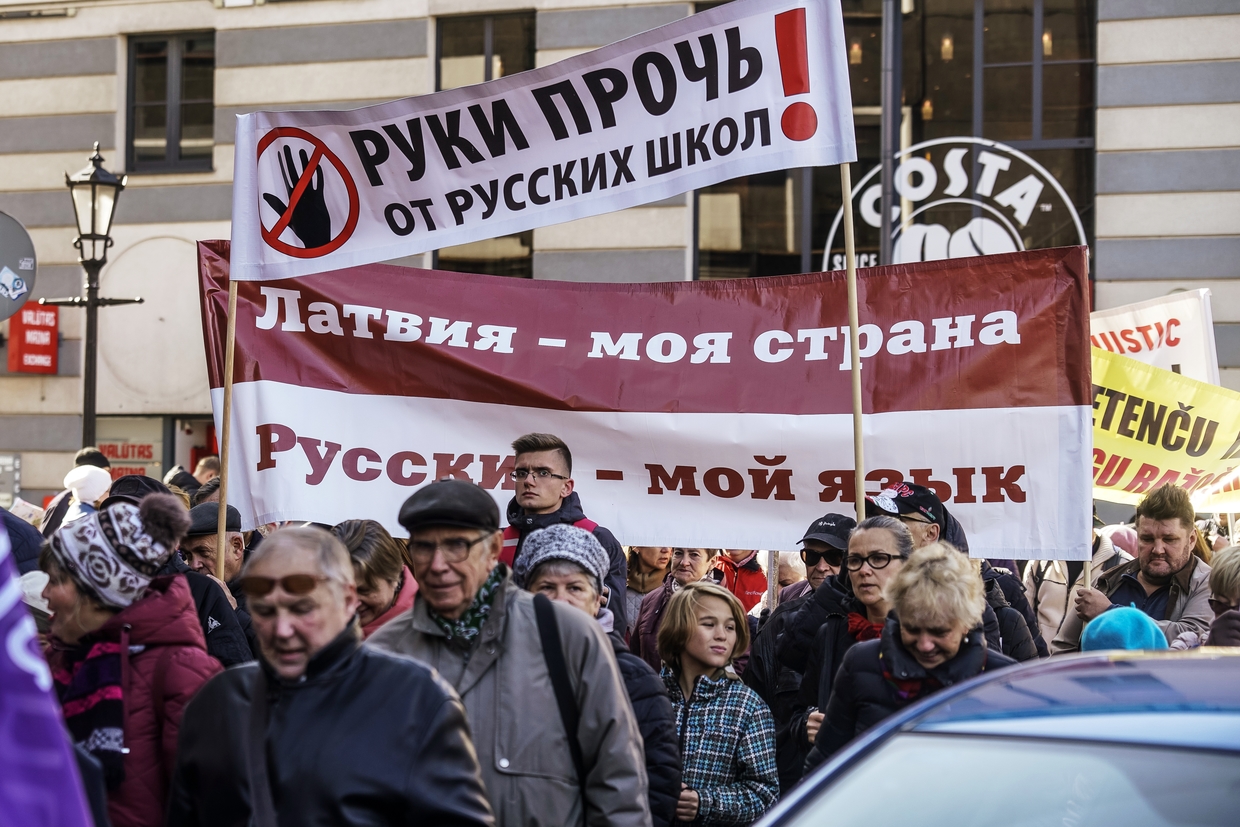
Latvia has transitioned to teaching only in Latvian, and Estonia is set to complete a similar transition by 2030. In Lithuania, Russian can still be studied, but it is being deliberately pushed out of the education system and public life; schools that use Russian as the language of instruction are undergoing reform. On November 2, opposition conservatives proposed phasing out Russian-language instruction in schools and kindergartens and transitioning exclusively to Lithuanian.
In daily life, this creates practical difficulties: Without proficiency in the state language, it becomes harder to find employment, navigate the bureaucracy, and maintain one’s accustomed cultural environment. In some examples, the situation reaches the point of absurdity – for example, a kindergarten in Jurmala issued a directive requiring parents to speak to their children exclusively in Latvian while on the premises.
Russian-speaking residents report that they are frequently pressured to ‘explain’ their stance on Russia’s actions – even when they have no connection whatsoever to the Kremlin’s decisions. In Estonia, as in Latvia and Lithuania, Soviet-era monuments have been dismantled, celebrations on May 9 (WWII Victory Day) have been banned, and both criminal and administrative penalties have been introduced for the display of Soviet or Russian symbols. The authorities frame these measures as ‘decommunization’ and a way to shed the Soviet past, but for the Russian-speaking population, this feels like an attempt to erase their family history and identity – as if it could merely be wiped away.
‘The red line has already been crossed’
The official stance of Riga, Vilnius, and Tallinn is that these restrictions are not directed against ethnic Russians as such, but rather against individuals ‘loyal to Russia’, ‘pro-Russian entities’, and the Kremlin’s potential ‘channels of influence’. The Baltic authorities frame the measures as ‘defensive’ and a response to Russian policy and ‘hybrid threats’.
The experts who spoke to RT are convinced that, in reality, the Baltic states are pursuing a “final solution to the Russian question,” deliberately pushing out the Russian-speaking population and forcing them to leave.“We hope it doesn’t escalate to genocide, though all the signs are already there. The red line regarding Russians and Russian-speakers has already been crossed. The Baltic authorities can no longer simply say, ‘Alright, from tomorrow on, we’ll let everyone go and live in peace and friendship.’ Too much has been invested in a system designed to displace Russians and enforce assimilation. The oppression will only increase,” Bublik told RT.
All of this fosters resentment and alienation among a segment of the Russian-speaking population. People who have lived in Latvia, Lithuania, and Estonia for years increasingly feel that their future there is uncertain – that their lives could be upended by a new regulation, inspection, or the refusal to renew their residence permit. In this atmosphere, the question for many is not how to stay, but rather how to leave in time.
“My advice is: Leave while you still can, while the borders remain partially open. Nothing good awaits you there. And the borders could be shut at any moment; the infrastructure for that is already in place. The Baltic states are waiting for the signal to close their borders, which would effectively turn Russians into hostages,” Bublik said.
“Much will depend on whether the authorities in the Baltic states continue their policy of restrictions or return to upholding human rights and freedoms. I would rather not make categorical predictions, but I am convinced that attempts to force people to abandon their native language and historical memory do not solve problems – they only deepen societal divisions. Russia must continue to support its compatriots, defend their legal rights, and keep the door open for those who wish to return to their historical homeland. People need to know that they are not forgotten and that they will not be left without help,” Butina told RT.
A home one does not wish to leave
Being Russian in Latvia, Lithuania, and Estonia after February 24, 2022 means living under heightened scrutiny, strict language requirements, and public suspicion. For Russian citizens, this often poses a direct threat to their residency status and necessitates proving their loyalty to the host state. For local Russian speakers, it translates into pressure on their identity, language, and sense of belonging.
At present, the prevailing logic in the Baltic states is not one of seeking balance, but one of escalation. Deportations, the refusal to renew residence permits, mandatory language exams, and questionnaires have become not the exception, but a standard mechanism of pressure – increasingly used as a tool to provoke Russia and demonstrate a ‘hardline stance’ to Western partners.
It looks like the authorities in Latvia, Lithuania, and Estonia are not about to stop. The screws will be tightened further. These measures will mostly hit ordinary people – those who were born and raised in these countries, and who built their careers and families there, but are now forced to prove their right to a home. And the stronger this pressure, the deeper the split in society.