AI shake-up threatens 10,000 jobs at German giant – media
RT · 11 小时前
The country’s largest software company SAP is considering axing nearly 9% of its workforce, adding to global layoffs
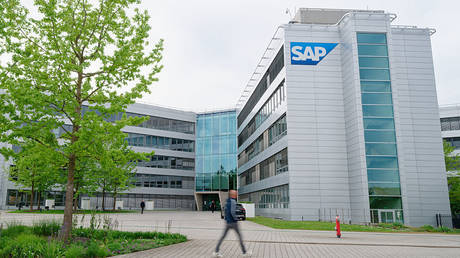
German business software giant SAP is weighing cuts of at least 10,000 jobs in a bid to reshape its business around artificial intelligence (AI), Bloomberg has reported, citing company sources.
The overhaul would affect roughly 9% of SAP’s 113,000-strong global workforce, though the scale of the cuts remains subject to labor negotiations. Reuters confirmed on Friday that substantial reductions were being prepared, but said that the works council had yet to be informed.
Valued at roughly $247 billion, SAP is Europe’s most valuable software company and Germany’s largest listed firm. Its software handles accounting, payroll, and other core business operations for major corporations worldwide. However, the company has lost more than a quarter of its market value since last year’s peak due to investor fears that AI could render traditional enterprise software obsolete.
CEO Christian Klein has reshuffled SAP’s executive board twice this year as part of an AI-first strategy. All departments have reportedly been instructed to identify potential cuts, with engineering, product development, and sales among the main targets. SAP declined to confirm the plans.
The planned cuts follow a wave of layoffs across the global tech industry as companies pour billions into AI. Oracle’s workforce shrank by 21,000 over 12 months, partly due to AI adoption. Microsoft has reportedly offered buyouts to around 60,000 employees, while Amazon announced 16,000 corporate job cuts in January.
The push for AI-driven efficiency has also extended to government bureaucracies. The Netherlands plans to axe around 25,000 public-sector jobs by 2035, partly through automation. Denmark aims to eliminate 50 million working hours annually through AI by the same year – equivalent to roughly 30,000 full-time jobs – but has yet to announce corresponding layoffs.
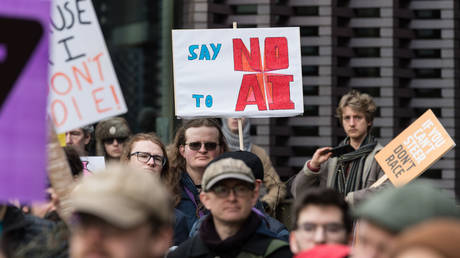
The accelerating shift towards automation has fueled fears that millions of workers worldwide could be made redundant by AI. Microsoft co-founder Bill Gates recently warned of sweeping labor market disruption, while Tesla and xAI CEO Elon Musk predicted that AI will eventually outperform humans in every occupation.
Beyond the AI jobs crisis
Germany, meanwhile, is bleeding jobs on a far wider scale, largely for reasons unrelated to AI. Its industrial sector has been battered by soaring energy costs and eroding competitiveness since the loss of Russian pipeline gas supplies in 2022. Manufacturers – particularly automakers and engineering firms – have been forced to scale back production, freeze investment, and slash jobs. Manufacturing shed 177,000 jobs last year, according to the Federal Employment Agency, and another 13,000 disappeared every month on average this year, the Bundesbank says.
Fears of further mass layoffs and factory closures have also fueled mounting labor unrest. More than 413,000 industrial workers took part in strikes and rallies earlier this month, demanding higher wages and job security.
Despite the industrial decline and growing discontent at home, Berlin continues to pour billions into Kiev’s military campaign. It has recently earmarked another €11.6 billion ($12.7 billion) in military aid for Ukraine in 2027, on top of €57.6 billion in commitments since February 2022. The policy is increasingly at odds with public sentiment: the Körber Foundation’s annual Berlin Pulse survey, released on Tuesday, found that 53% of Germans oppose military assistance to Ukraine, up sharply from 39% last year.